
Free dungeon assets in pixel, isometric and low poly 3D
A dungeon is the friendliest level a game can have: walls on a grid, rooms joined by corridors, a door, a key, a chest. It's simple to build, simple to generate, and players know how to read it before their first step.
Dungeon tiles, rooms and monsters from the library. 5 here.

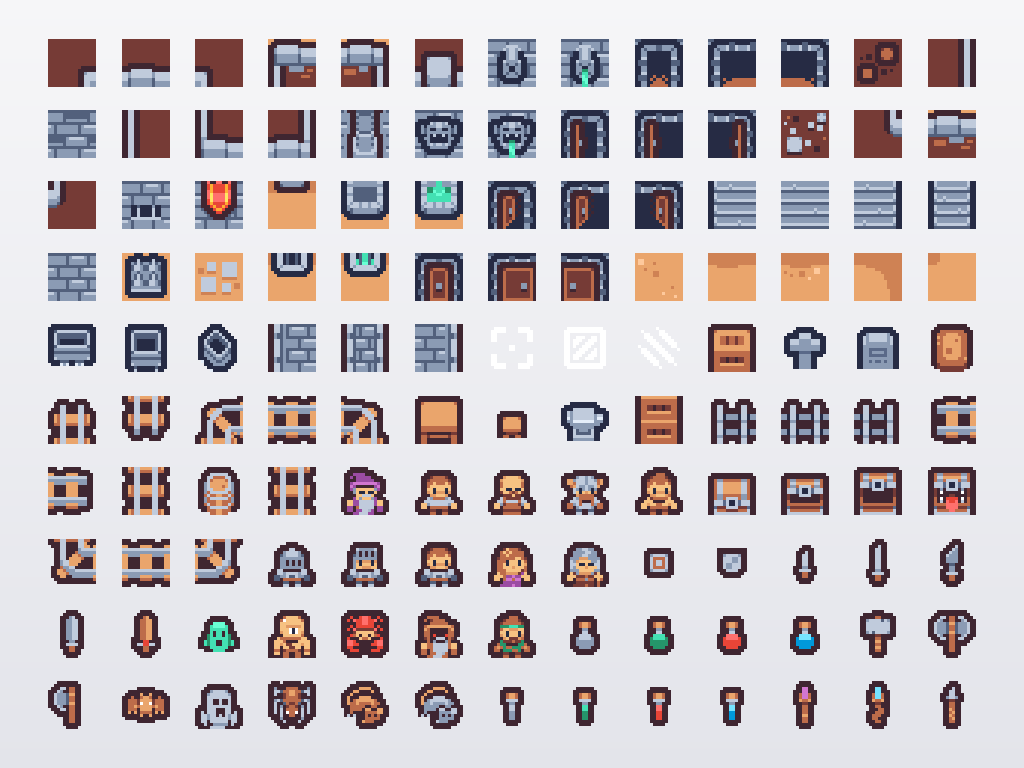
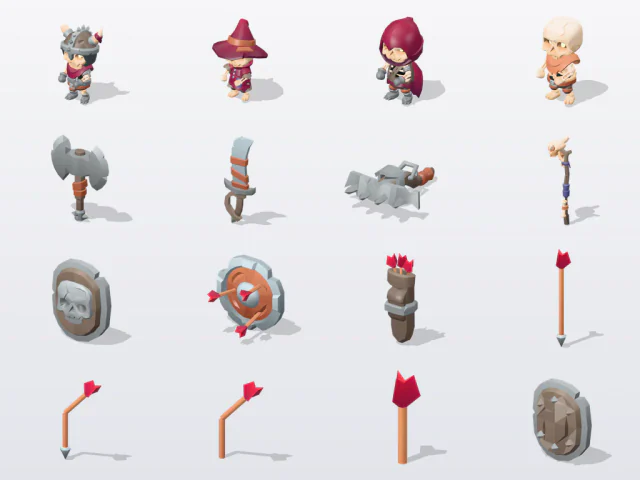
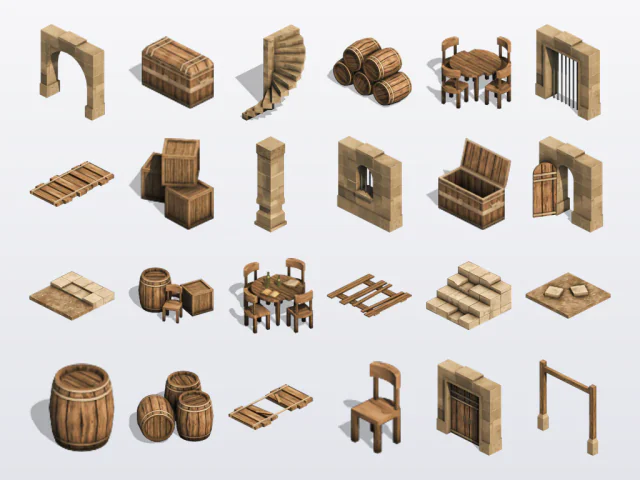
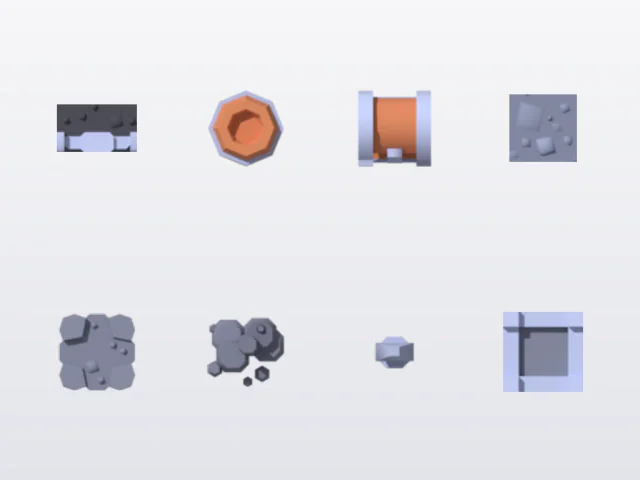
Among the library's dungeon packs are three distinct looks: KayKit's low poly dungeon kit in 3D, Kenney's tiny dungeon in pixel art, and Kenney's isometric miniature dungeon. All CC0, and all free on their makers' sites as well.
Choose the camera, then the pack
- Top-down pixel (tiny dungeon): the classic roguelike view. Tiles are small, levels are quick to generate, and characters need only a few frames.
- Isometric (isometric miniature dungeon): rooms with visible depth and walls, from flat sprites. Movement on the diagonal grid takes a little more care, but the look is rich.
- Low poly 3D (KayKit's dungeon): a real camera that can follow the hero, light from torches, and rigged skeletons to fight.
Phone players hold the device in one hand or two, so pick controls that suit the camera: tap to move works well from above, and a virtual stick suits 3D.
Generating dungeons from tiles
Dungeon kits lend themselves to generated levels, because every piece sits on the same grid. Common recipes:
- Rooms and corridors: scatter rooms at random, then join each to its nearest neighbor.
- Binary space partitioning: split the map in two again and again, and put a room in each final piece.
- Random walks or cellular automata: carve winding caves instead of square rooms.
Generate a grid of numbers first, then choose each cell's tile from its neighbors, so a wall with floor below it gets the wall-face tile. Keeping the map as data makes it easy to save, test, and replay from a seed.
Lighting the dark
A dungeon lives in its light. In 3D, a few torches with point lights and Tyrbo's fire effect make the space, but real lights are costly on a phone: keep two or three that travel with the player, and fake the rest with emissive flames and a soft additive glow. In 2D, darken the screen and cut a soft circle of light around the hero. It hides the edges of the level and adds suspense for almost nothing.
Filling the rooms
Empty corridors are boring corridors. Give each room one reason to go in: a chest, a trap, a monster, a lever. KayKit's rigged skeletons are ready-made enemies for a 3D dungeon, and the library's sound packs have coins, hits and power-ups for every pickup and fight. Want the whole crawler, not only its rooms? That's what Tyrbo's dungeon crawler game maker is for.
Questions people ask
Which camera works for a dungeon crawler on a phone?
Top-down, or a high three-quarter view. Both show the room around the hero, work with one-thumb controls and keep the art small. A low 3D camera looks dramatic, but walls start blocking the view.
Can I generate random dungeons with these tiles?
Yes. They sit on a regular grid with matching walls and corners, which is what a generator needs. Start with rooms and corridors on a grid of numbers, then map each number to a tile.
Are the dungeon packs free for commercial use?
Yes, all of them are CC0. Sell the game, change the tiles, and skip the credit if you have to. Kenney and Kay Lousberg both welcome support if their packs help you.
Make a game with them
Make your gameSign in to get the plan and its concept art. Both are free.